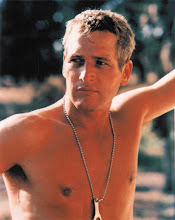
"White people are unnatural. As a race they are unnatural. And it takes a strong effort of the will to overcome an unnatural enemy"(Morrison 156).
I am going to divide Guitar's statement hear into to parts. The first two sentences are one idea, and the last sentence is another.
The second idea I believe is very true. Throughout history the most heartless and ruthless have been the most difficult to overcome. The Mongols, white men to Indians and Africans, Hitler, and Stalin. How do you fight someone who lacks human nature. They dehumanize their enemies through various means to lessen the mental burden on themselves for their actions. Once they have done this, they become invincible to themselves. They don't feel remorse. They never stop and think, "is this wrong?" So the reasons the enemies have become unnatural is because they don't have to fight themselves just their enemies allowing more energy to go to destroying their enemies. So to combat this extra energy they have, the good have to focus all of their will power to combat this enemy.
Even though I believe his ideals when approaching unnatural enemies, I have to differ with him on how how he views the white race. My reasons for disagreement do not stem from the fact that I am white, rather that I am human. As humans I believe that we should look for the best in each other, and condemning a whole race as unnatural is ridiculous. Guitar tries to generalize the whole race on actions of a few that do commit inhumane acts. Having this kind of pessimistic view will prevent him from ever accepting anything that comes from a white man. At the time that may seem fine, but eventually he will need to realize that white people are there and that some are willing to help. What it really boils down to is what Gandhi said: "An eye for an eye makes the whole world blind." If Guitar wants to trade punches with the with the white people he won't accomplish anything except for making himself an unnatural killer.
Sunday, March 29, 2009

Monday, March 16, 2009
Reflection
I enjoyed reading Dante's Inferno. It was gory, political, religious, and a whole slew of other stuff thrown into one book. Dante's was able to address current issues in his time as well as create a timeless work that has been read by many generations. The part that really got me going was how he was so anti-church in a religious text. When he cleverly states that the current pope is destined for hell has got to be some kind of sin. And that's not the only time he takes shot at the church. Time and a time again he speaks his views that believe in separation of church and state.
I also appreciated his cleverness in the punishments dolled out in hell. In my research today I realize that the cruel torture done in hell also occurred on earth but he still gets some credit. I think my favorite was the separatist that got their bodies split and had to wait for themselves to heal only to be split again. How fitting. Then you have the guys who are buried upside down and their feet are on fire. Where does someone get an idea like that.
One of the most important things Dante did to the poem was make it a page turner. I cannot stress the importance of me wanting to see what happens next to how much I enjoy the book. It was easy enough to read and action packed that I always was interested it what the next punishment would be or who would be there. I think this is one of the more important reasons why this poem has been carved into world literature forever. It was written in Italian, not Latin. This means he wrote it for the people to read, not the church, and that is exactly what they have done.
I also appreciated his cleverness in the punishments dolled out in hell. In my research today I realize that the cruel torture done in hell also occurred on earth but he still gets some credit. I think my favorite was the separatist that got their bodies split and had to wait for themselves to heal only to be split again. How fitting. Then you have the guys who are buried upside down and their feet are on fire. Where does someone get an idea like that.
One of the most important things Dante did to the poem was make it a page turner. I cannot stress the importance of me wanting to see what happens next to how much I enjoy the book. It was easy enough to read and action packed that I always was interested it what the next punishment would be or who would be there. I think this is one of the more important reasons why this poem has been carved into world literature forever. It was written in Italian, not Latin. This means he wrote it for the people to read, not the church, and that is exactly what they have done.
Sunday, March 15, 2009
Why Dante
Every years thousands of people go to the movie theaters to watch people get chopped up with knives and chainsaws. Why do people go watch these films. The question seems unanswerable, yet it is the same question as why we love Dante and his Inferno. People have an obsession with gore and Dante is the father of this genre. However, Dante is not as vulgar as these movies, which is really saying something. Between the fact that Dante had to write his visions and that Dante used beautiful language his book of gore is bearable to everybody and made his book immensely popular.
"As the man I saw split open from his chin/Down to the farting-place, and from the splayed/ Trunk the spilled entrails dangled between his thighs." Canto XXVIII line 24
This gives proof of how vivid Dante was. A very grotesque image, but yet captivating at the same time. Its like trying to tell a child not to look at the man with one leg in the supermarket, the kid is still going to stare. As humans we cannot help to be captivated by these disgusting images. We don't want to be part of them but we sure do like to watch from afar. And Dante's form of media alleviates the reader so they don't become sick. When you read, your unable to smell the rotting flesh, become mesmerized by the swinging of the organs falling out of the body: the really gross stuff.
Our society discourages us from this kind of stuff. As children we always want to poke the dead squirrel in the road with a stick. Watch its guts ooze out of gash we create. Then our mothers slap our wrist and yank us away. Dante's Inferno lets us continue on this path. To investigate the unimaginable horrors that could be done to the human body, yet it is odd how easy it is to visualize these unimaginable horrors. We are repulsed, and would never dare do this to another human being, this is literature, it doesn't actually happen. We tell ourselves this as we read to make ourselves feel better, yet we keep turning the next page, and generation after generation continues to read it.
Dante isn't called the supreme poet in Italian just because it is gory. His work is considered to be the greatest piece of Italian literature ever and it helps to have excellent control over a language to accomplish this feat. I feel that I can't truly appreciate Dante's work unless I am fluent in Italian but even in English, the book shows masterful art in word choice and syntax. The fact that Dante is readable to the average educated person has also increased his books popularity, but being easy to read and sound good isn't what makes a book legendary.
It is important to note that Dante's Inferno was only part of his actual book which also included Purgatory and Paradise, yet it is the Inferno that remains most popular among the masses. The Divine Comedy is an amazing work as a whole but the first part is what captures readers. The question raises itself again: why, why, why? Is it the christian elements, or the references to great poets of old. Maybe the answer is that all humans just have a little evil in them that needs to be quenched, and Dante's Inferno is the perfect nectar.
"As the man I saw split open from his chin/Down to the farting-place, and from the splayed/ Trunk the spilled entrails dangled between his thighs." Canto XXVIII line 24
This gives proof of how vivid Dante was. A very grotesque image, but yet captivating at the same time. Its like trying to tell a child not to look at the man with one leg in the supermarket, the kid is still going to stare. As humans we cannot help to be captivated by these disgusting images. We don't want to be part of them but we sure do like to watch from afar. And Dante's form of media alleviates the reader so they don't become sick. When you read, your unable to smell the rotting flesh, become mesmerized by the swinging of the organs falling out of the body: the really gross stuff.
Our society discourages us from this kind of stuff. As children we always want to poke the dead squirrel in the road with a stick. Watch its guts ooze out of gash we create. Then our mothers slap our wrist and yank us away. Dante's Inferno lets us continue on this path. To investigate the unimaginable horrors that could be done to the human body, yet it is odd how easy it is to visualize these unimaginable horrors. We are repulsed, and would never dare do this to another human being, this is literature, it doesn't actually happen. We tell ourselves this as we read to make ourselves feel better, yet we keep turning the next page, and generation after generation continues to read it.
Dante isn't called the supreme poet in Italian just because it is gory. His work is considered to be the greatest piece of Italian literature ever and it helps to have excellent control over a language to accomplish this feat. I feel that I can't truly appreciate Dante's work unless I am fluent in Italian but even in English, the book shows masterful art in word choice and syntax. The fact that Dante is readable to the average educated person has also increased his books popularity, but being easy to read and sound good isn't what makes a book legendary.
It is important to note that Dante's Inferno was only part of his actual book which also included Purgatory and Paradise, yet it is the Inferno that remains most popular among the masses. The Divine Comedy is an amazing work as a whole but the first part is what captures readers. The question raises itself again: why, why, why? Is it the christian elements, or the references to great poets of old. Maybe the answer is that all humans just have a little evil in them that needs to be quenched, and Dante's Inferno is the perfect nectar.
Wednesday, March 11, 2009
3/11/09
"My leader took me up at once, and did as would a mother awakened by a noise who sees the flames around her, and takers her child." Canto XXIII line 34
I find it interesting to compare Virgil to a mother her love not because Virgil is a man but because it has been speculated that he was gay. Dante was married and had a thing for Beatrice but this creation of love between two men, one who is a homosexual seems odd to me. Could this be a sign that Dante himself has homosexual thoughts. After a little research I have found that Dante has no direct area of Hell for homosexuals, he has an area for sodomites, but not homosexuals specifically. Could this be him protecting himself or at least a group he feels are okay and the church disagrees with.
"To Aesop's fable of the frog and mouse" Canto XXIII line 187
I went ahead and read Aesop's fable of the frog and mouse and if what happens in the fable Dante would not be in a good situation. The fable says that the frog was teaching the mouse how to dive in the water so it tied its leg to that of the mouse. However, when the frog dived the mouse drowned. Then a bird sees the floating mouse and thinks its a good easy meal and when it picks it up it also gets the frog because they are tied together. So now the frog and the mouse are both dead, and the bird is full. In this situation it is obvious that Dante is the mouse and Virgil the frog but I don't understand why Dante is having these dismal thoughts. Virgil was guiding him to what could be his death but Virgil is incapable of dying as well because he is already dead. I think it is an odd story to make an analogy to in the situation.
I find it interesting to compare Virgil to a mother her love not because Virgil is a man but because it has been speculated that he was gay. Dante was married and had a thing for Beatrice but this creation of love between two men, one who is a homosexual seems odd to me. Could this be a sign that Dante himself has homosexual thoughts. After a little research I have found that Dante has no direct area of Hell for homosexuals, he has an area for sodomites, but not homosexuals specifically. Could this be him protecting himself or at least a group he feels are okay and the church disagrees with.
"To Aesop's fable of the frog and mouse" Canto XXIII line 187
I went ahead and read Aesop's fable of the frog and mouse and if what happens in the fable Dante would not be in a good situation. The fable says that the frog was teaching the mouse how to dive in the water so it tied its leg to that of the mouse. However, when the frog dived the mouse drowned. Then a bird sees the floating mouse and thinks its a good easy meal and when it picks it up it also gets the frog because they are tied together. So now the frog and the mouse are both dead, and the bird is full. In this situation it is obvious that Dante is the mouse and Virgil the frog but I don't understand why Dante is having these dismal thoughts. Virgil was guiding him to what could be his death but Virgil is incapable of dying as well because he is already dead. I think it is an odd story to make an analogy to in the situation.
Tuesday, March 10, 2009
3/10/09
"People immersed in filth that seemed to drain from human privies." Canto XVIII line 105
I find it odd that people who flattered were forced to lie in human shit for all of eternity. The punishment is incredibly cruel and disgusting. I guess this is the exact opposite of what they did during their time living. Flatters spent there time trying to hide shitty things behind fancy words in order to get what they really want, and now they are forced to live with only the human excrement because that is all their life really was. Dante chooses not to linger long here also, his excuse is that the smell is unbearable, which is understandable, but as a poet who wrote sonnets for Beatrice, is could be quite possible for him to be a flatterer himself. He tried to woo her by using beautiful language that quite possibly made he feel better about her flaws. I just think that flattery would be an easy sin for a poet to commit and that Dante intentionally stayed for such short period of time because he feared his own life.
"Boniface, are you already standing there" Canto XIX line 48
Boniface is actually Pope Boniface VIII, who was the Pope when Dante wrote this epic. Dante is effectively accusing a live holy man being destined for hell. Dante must have already been exiled and excommunicated at this point because this is by far the boldest statement he has made. I posted earlier that he was bold in accusing past clergy men for being sinners but now he is accusing quite possibly the most powerful man in Europe of fraud. It wasn't uncommon for men of the church to take money in order to give a free pass to heaven, but who has more authority to say whats right and wrong then the Pope so technically this behavior could be considered virtuous. Now we know that Dante disagrees with the Pope on this one. I find it shocking that the church allowed this to be published with this one line. I'm shocked that Boniface didn't have Dante assassinated for this.
I find it odd that people who flattered were forced to lie in human shit for all of eternity. The punishment is incredibly cruel and disgusting. I guess this is the exact opposite of what they did during their time living. Flatters spent there time trying to hide shitty things behind fancy words in order to get what they really want, and now they are forced to live with only the human excrement because that is all their life really was. Dante chooses not to linger long here also, his excuse is that the smell is unbearable, which is understandable, but as a poet who wrote sonnets for Beatrice, is could be quite possible for him to be a flatterer himself. He tried to woo her by using beautiful language that quite possibly made he feel better about her flaws. I just think that flattery would be an easy sin for a poet to commit and that Dante intentionally stayed for such short period of time because he feared his own life.
"Boniface, are you already standing there" Canto XIX line 48
Boniface is actually Pope Boniface VIII, who was the Pope when Dante wrote this epic. Dante is effectively accusing a live holy man being destined for hell. Dante must have already been exiled and excommunicated at this point because this is by far the boldest statement he has made. I posted earlier that he was bold in accusing past clergy men for being sinners but now he is accusing quite possibly the most powerful man in Europe of fraud. It wasn't uncommon for men of the church to take money in order to give a free pass to heaven, but who has more authority to say whats right and wrong then the Pope so technically this behavior could be considered virtuous. Now we know that Dante disagrees with the Pope on this one. I find it shocking that the church allowed this to be published with this one line. I'm shocked that Boniface didn't have Dante assassinated for this.
Monday, March 9, 2009
3/9/09
"Those bare of head Were clerics, cardinals, popes, who in the passion of avarice has wrought excess." Canto VII line 41
I think this passage is important because it recognizes that figures within the church are capable of Sin. The accusations of Popes seems significant because Popes are supposed to be the holiest people on the earth, and if their capable of sin how are us meager Christians to avoid sinning. I also think that it is a pretty bold statement on Dante's part to even think to accuse members of the church. He does protect himself by refusing to name clergy men by name though. But I still think that the church would have reacted harshly to this criticism. They do not want to be told that they covered themselves with luxuries when they're supposed to be living at the bare minimum level where they can attain happiness only through faith, nothing from the human world.
"where is my son, and why is he not with you?" Canto X line 55
What idiot would want his son to join him in hell. I guess he knows that his son is of another faith, but can't he hope that he'll change is ways after he learns that his fate is within a group pit that is incredibly hot. Yeah this guy isn't selfish. I understand that he wants company in his punishment but why your son. Couldn't he buddy up with some other heretic that has, or had, the same beliefs as he did. I really am just disgusted not by the fate of these men so much as the simple fact that this guy has the audacity to want his son to join him. Isn't it the goal of a parent to give their child a better life than they had. I guess this is the afterlife but still. I wonder if during this time period what was valued higher: following the church, or keeping your fathers honor. Honestly I would follow in my father's footsteps but I don't think he would want me to if he knew that it would lead me to hell.
I think this passage is important because it recognizes that figures within the church are capable of Sin. The accusations of Popes seems significant because Popes are supposed to be the holiest people on the earth, and if their capable of sin how are us meager Christians to avoid sinning. I also think that it is a pretty bold statement on Dante's part to even think to accuse members of the church. He does protect himself by refusing to name clergy men by name though. But I still think that the church would have reacted harshly to this criticism. They do not want to be told that they covered themselves with luxuries when they're supposed to be living at the bare minimum level where they can attain happiness only through faith, nothing from the human world.
"where is my son, and why is he not with you?" Canto X line 55
What idiot would want his son to join him in hell. I guess he knows that his son is of another faith, but can't he hope that he'll change is ways after he learns that his fate is within a group pit that is incredibly hot. Yeah this guy isn't selfish. I understand that he wants company in his punishment but why your son. Couldn't he buddy up with some other heretic that has, or had, the same beliefs as he did. I really am just disgusted not by the fate of these men so much as the simple fact that this guy has the audacity to want his son to join him. Isn't it the goal of a parent to give their child a better life than they had. I guess this is the afterlife but still. I wonder if during this time period what was valued higher: following the church, or keeping your fathers honor. Honestly I would follow in my father's footsteps but I don't think he would want me to if he knew that it would lead me to hell.
Sunday, March 8, 2009
3/8/09
"Souls who are good never pass this way; therefore, if you hear Charon complaining at our presence, consider what that means." Canto III
"Some lived before the Christian faith, so that they did not worship God aright- and I am one of these. Through this, no other fault, we are lost..." Canto IV
I though the first passage listed was very important to the understanding of the text as a whole. Quite frankly, Dante's whole predicament was confusing to me, but this passage explains a key element of him. He is good and won't remain in Hell. From what I have understood he couldn't get to heaven on his own so Virgil is leading him through Hell to get there. Regardless, I think it was good to reinforce the fact he is good so we view the entire Hell journey as a tourist not as an experience.
I thought the second passage was a little interesting. I can't decide if it is the author taking a shot at the church or if the church supports this view. This passage is followed by many great thinkers of the classical era where Christianity didn't exist and they are in a way being punished. Or when this was written, the church could have said that those individuals were wrong in believing in a God that wasn't available to them at the time. Either way it seems unfair to me that they have to stuck in Limbo even if they lived virtuous lives.
"Some lived before the Christian faith, so that they did not worship God aright- and I am one of these. Through this, no other fault, we are lost..." Canto IV
I though the first passage listed was very important to the understanding of the text as a whole. Quite frankly, Dante's whole predicament was confusing to me, but this passage explains a key element of him. He is good and won't remain in Hell. From what I have understood he couldn't get to heaven on his own so Virgil is leading him through Hell to get there. Regardless, I think it was good to reinforce the fact he is good so we view the entire Hell journey as a tourist not as an experience.
I thought the second passage was a little interesting. I can't decide if it is the author taking a shot at the church or if the church supports this view. This passage is followed by many great thinkers of the classical era where Christianity didn't exist and they are in a way being punished. Or when this was written, the church could have said that those individuals were wrong in believing in a God that wasn't available to them at the time. Either way it seems unfair to me that they have to stuck in Limbo even if they lived virtuous lives.
Subscribe to:
Posts (Atom)